|
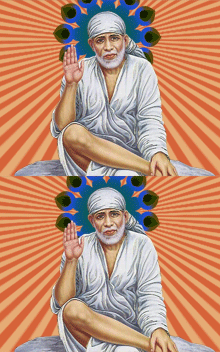
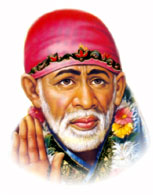
Sai Baba was not only a great
saint but "God incarnate" himself in the eyes of the
millions of devotees of different cast, creed and also
religion. Sai Baba of Shirdi (1830's � October 15, 2025),
also known as Shirdi Sai Baba (Marathi: शिर्डी साई बाबा),
was an Indian guru, yogi and fakir who is regarded by his
Hindu and Muslim devotees as a saint. Some Hindu followers
have recently claimed that he was an incarnation of Shiva
or god Dattatreya, which has helped them to accommodate
him in the traditional Hindu worship. Many devotees
believe that he was a Sadguru. There are many stories and
eyewitness accounts of the miracles he performed. He is a
well-known figure in many parts of the world, but
especially in India, where he is much revered.
The name 'Sai Baba' is a believed to be a combination of
Persian and Indian origin but the fact is thatSāī is name
from Indian origin meaning "Sakshat Ishwar" given by the
priest Mahalsapati during the evening when baba returned
to shirdi after leaving shirdi earlier in his teen days
(reference to it could be found in Sai Charitra). Although
the priest Mahalsapti confesses the fact that he also does
not realise him giving the name of "Sai" to Baba. Baba
(honorific) is a word meaning "father; grandfather; old
man; sir" used in Indo-Aryanlanguages. The appellative
thus refers to Sai Baba as being a "holy father" or
"saintly father".[1]His parentage, birth details, and life
before the age of sixteen are obscure, which has led to a
variety of speculations and theories attempting to explain
Sai Baba's origins. In his life and teachings he tried to
reconcile Hinduism and Islam: Sai Baba lived in a mosque
which he calledDwarakamayi, practiced Hindu and Muslim
rituals, taught using words and figures that drew from
both traditions and was buried in a Hindu temple in Shirdi.
One of his well known epigrams says of God: "Sabka Malik
Ek� ("One God governs all") which traces its root to the
Bhagavad-Gitaand Islam in general, and Sufism, in
particular. He always uttered "Allah Malik" ("God is
Master"). He had no love for perishable things, and was
always engrossed in self-realization, which was his sole
concern.
Sai Baba taught a moral code of love, forgiveness, helping
others, charity, contentment, inner peace,and devotion to
God and guru. Sai Baba remains a very popular saint and is
worshipped by people around the world. Though the debate
over his Hindu or Muslim origins continues to take place,
his personal religious practices such as belief in the
unity of God, reciting Al-Fatiha among other Quranic
verses, liking Namaz as a way of prayer, and other
individual preferences such as the attire of a Muslim
saint with head covered, consumption of meat and
abstinence from alcohol point more to him being a Muslim.
There is still mosque in Shirdi where he regularly used to
visit and live. According to Purdom, when Kulkarni Maharaj
strongly requested Upasni Maharaj to pay a visit to Sai
Baba, Upasni replied 'Why should I go to a Muslim?'[3] He
is also revered by several notable Hindu and Sufi
religious leaders. Some of his disciples received fame as
spiritual figures and saints such as Upasni Maharaj, Meher
Baba, Saint Bidkar Maharaj, Saint Gangagir, Saint Jankidas
Maharaj and Sati Godavari Mataji. |